
Prepare your documents for Eviction in Hawaii
This website helps prepare the forms required for Eviction in Hawaii.
An overview of Eviction at is here
HOW IT WORKS

1. Take Screening
Start with an online screening tool to help you determine which eviction-related legal option best fits your situation.

2. Prepare Documents
Instead of looking at the forms themselves, our system will help you complete your filing documents by having you answer all of the necessary information by topic. We will ask you questions in plain and non-legal language. To make this process as simple as possible, our system will then generate your response anywhere it is needed on the forms.

3. Consult Advocate (Optional)
You can consult a housing advocate to get guidance on eviction-related matters. If you’re facing eviction from a rental property, an advocate can help you understand your rights and options. They can review your case documents, speak with you directly about your situation, and assist with developing a plan to maintain housing stability.

4. File with the Clerk
You can formally begin the eviction case by filing your documents with the District Court of the State of Hawaiʻi. You may file in person at the court’s filing office or, where available, through the Judiciary Electronic Filing System (JEFS).
Filing must be done in the appropriate District Court based on the location of the rental property (e.g., Oʻahu, Maui, Hawaiʻi Island, or Kauaʻi divisions).
Process
Step 1
You: Take Online Screening
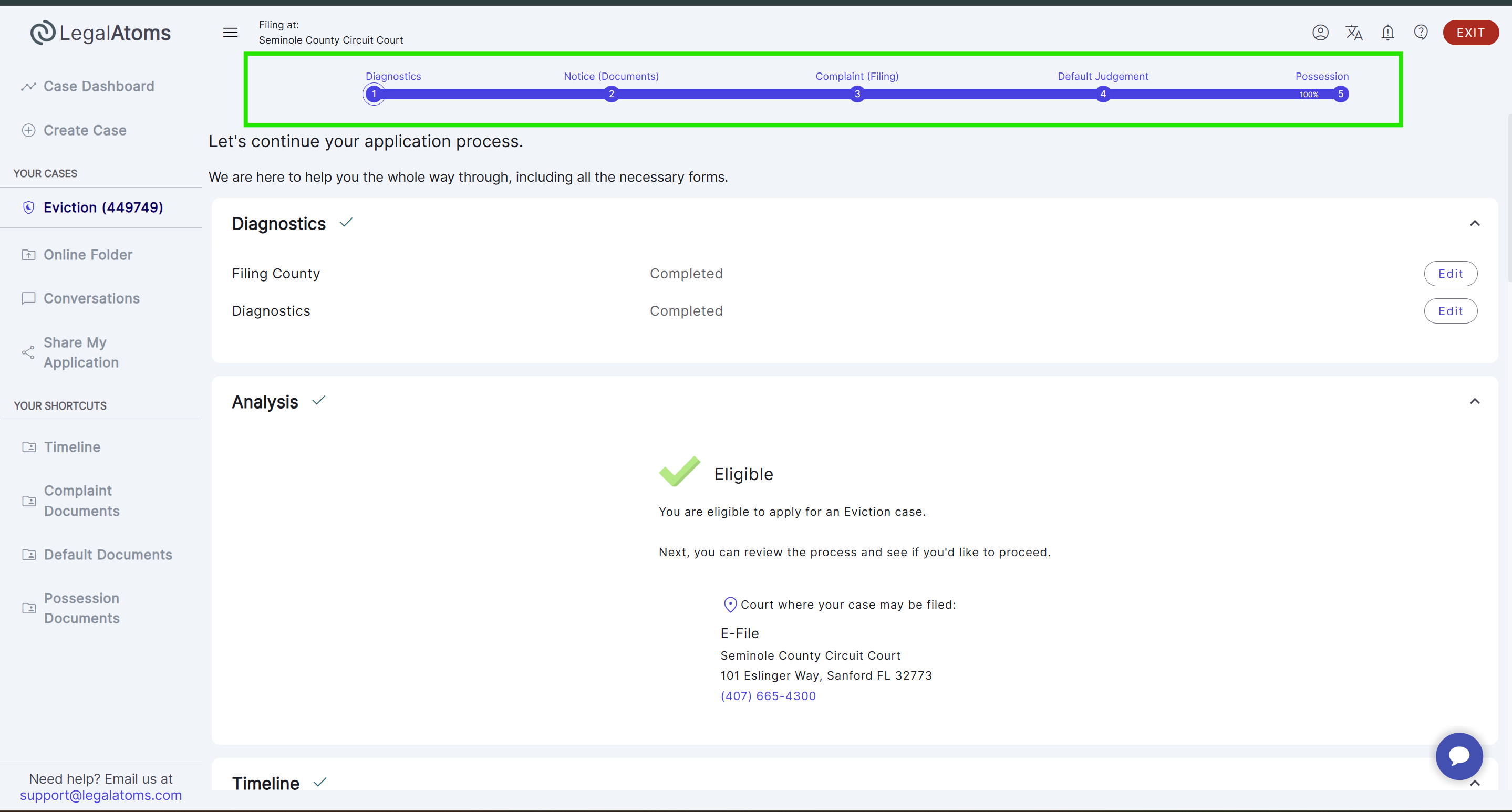
Begin your eviction process by taking the screening on LegalAtoms. Just enter your zip code in the top right corner of the homepage, then answer some simple questions about your rental situation and the tenant issue you are facing. This screening is designed to confirm whether filing an eviction case is appropriate for your situation and which specific forms and steps you will need. Based on your answers, LegalAtoms customizes the process to fit your county’s local rules and your case details. Before starting, gather all relevant documents to support your eviction claim.
Step 2
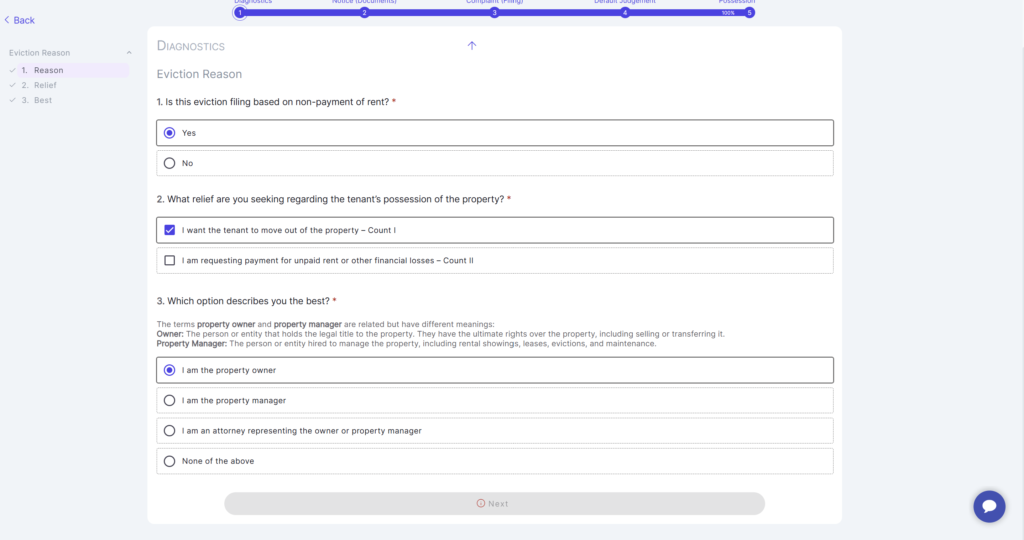
You: Serve the Required 10-Day Notice
For non-payment of rent, you must first serve a 10-calendar-day notice of termination to the tenant. This notice must clearly state the amount owed and give the tenant time to cure the default. A copy of this notice must also be provided to a state-funded mediation center. Keep proof of service, as it is required for court filing.
Step 3
You: Allow Time for Response or Mediation
After serving the notice:
- Wait 10 calendar days for the tenant to pay or respond.
- If mediation is requested within this period, you must wait up to 20 calendar days before filing the case.
If the tenant resolves the issue, the process ends. If not, proceed to court.
Step 4
You: Create Your Eviction Case on LegalAtoms
Log into your LegalAtoms account, or create a new one if you don’t have an account yet. On your dashboard, select “Start New Case” and choose “Eviction” as the case type. The platform will guide you step-by-step through entering:
Tenant’s full name and contact information
Property address and lease details
Uploading evidence such as the lease, the 3-Day Notice, and rent payment history
LegalAtoms then automatically prepares all the required court forms, including the Eviction Complaint. You can choose to include request for unpaid rent and possession if applicable.
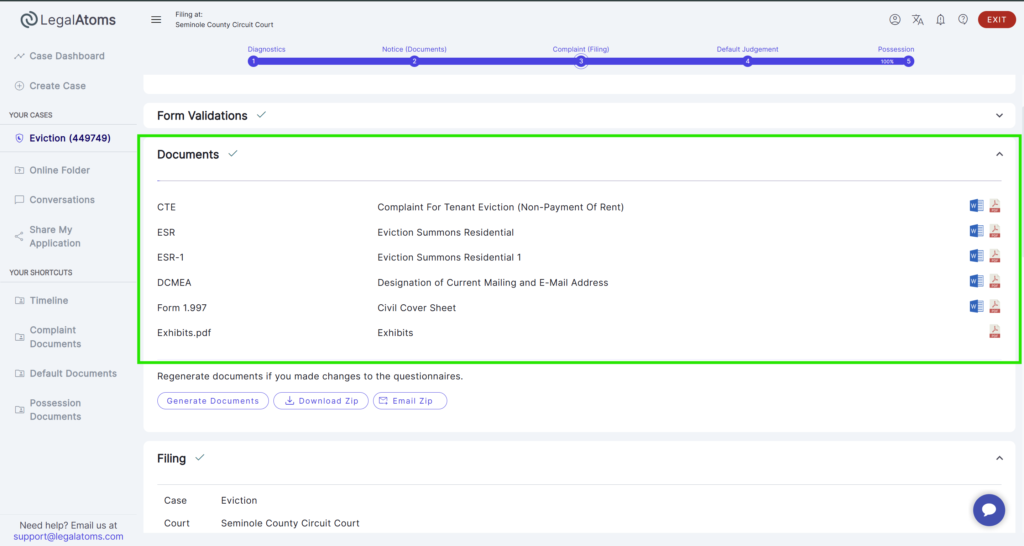
Review all documents carefully, then digitally sign them directly within the platform. Finally, submit your filing electronically through LegalAtoms’s e-filing system if your county supports it. If e-filing is unavailable, you can download a complete filing packet to submit in person at your local courthouse.
Step 5
You: File the Complaint with the Court
File your case in the appropriate District Court by submitting:
- Complaint (Form 1DCO8) for possession and/or damages
- Copies of the 10-day notice and supporting documents (as exhibits)
The court will assign a case number and issue a Summons.
Step 6
You: Serve the Summons and Complaint
You must have the Summons and Complaint properly served on each tenant (defendant) by an authorized person (e.g., sheriff or process server). You cannot serve the documents yourself. Proof of service must be filed with the court.
Step 7
Wait for Tenant’s Response (Appearance)
After the Summons and Complaint are served, the tenant is required to respond by appearing at the court hearing, rather than filing a detailed written answer in most summary possession cases.
The court typically schedules the hearing no sooner than 5 days after service of the Summons
This period serves as the tenant’s response time
Outcomes:
If the tenant appears at the hearing → they may present defenses
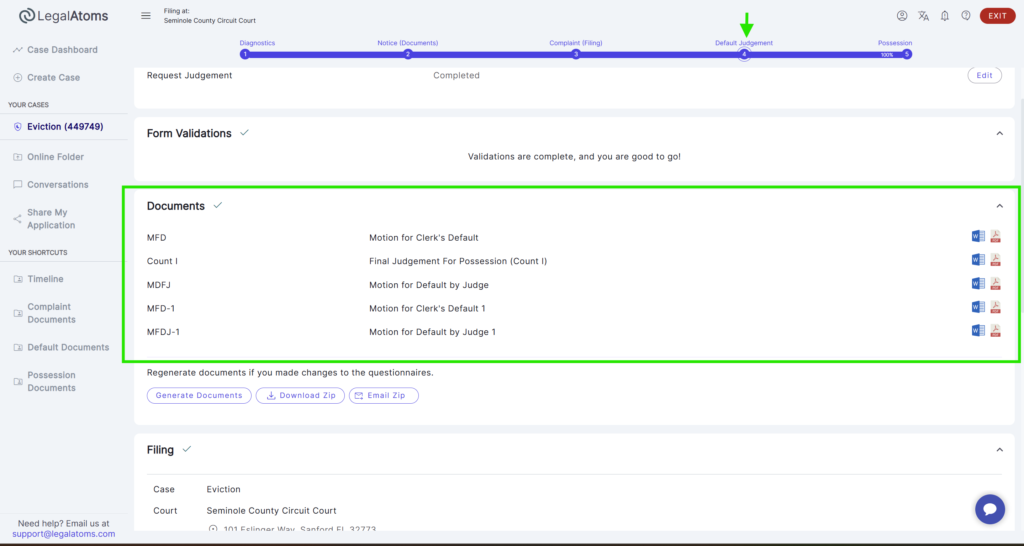
If the tenant fails to appear → the landlord may request a default judgment for possession
This waiting period between service and the hearing is critical, as it ensures the tenant has proper legal notice and opportunity to respond.
Step 8
You: Attend the Court Hearing
The court will schedule a hearing, usually within a short time. Both landlord and tenant may present evidence and arguments. Bring all documents, including the lease, notice, and payment records.
Step 9
You: Court Decision (Judgment)
If the court rules in your favor, it may issue a Judgment for Possession and, if requested, a money judgment for unpaid rent or damages.
Step 10
You: Request Writ of Possession
If the tenant does not leave voluntarily after judgment, you may request a Writ of Possession from the court. This authorizes a sheriff or police officer to remove the tenant and restore possession of the property to you.
Afterward, you can file a Request for Writ of Possession through LegalAtoms.
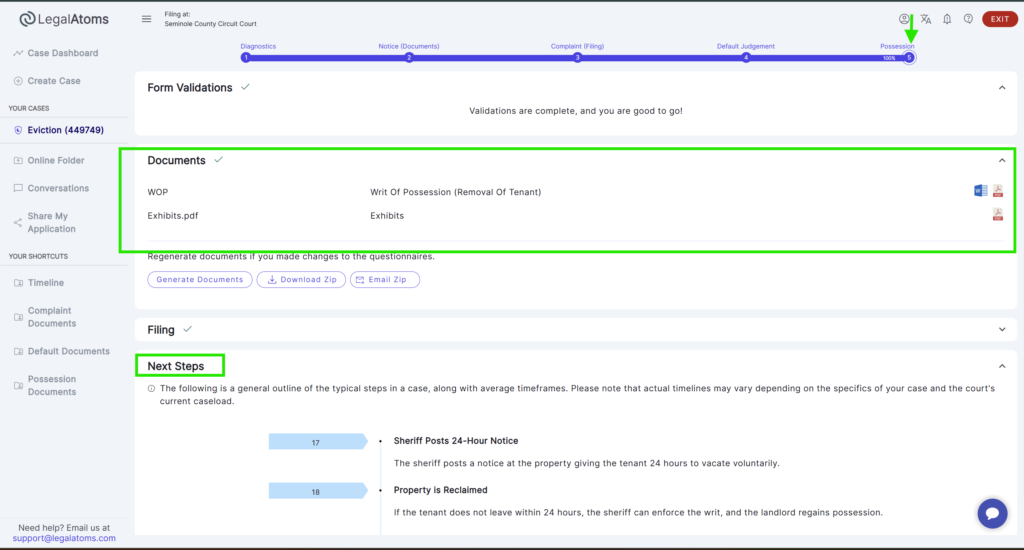
Step 11
Enforcement of Eviction
The sheriff will serve the writ and carry out the eviction if the tenant does not vacate. After enforcement, you regain legal possession of the property.
FAQs
Court Forms Created This website guides you through all the topics required to complete your protection order documents and file your case.
Core Forms
-
Notice to Tenant
-
Complaint For Tenant Eviction (Non-Payment Of Rent)
-
Eviction Summons Residential
-
Motion for Clerk’s Default
With Possession
-
Motion for Default by Judge
-
Proposed Final Judgment – Count I
-
Final Judgment – Count I
-
Writ of Possession