
Recently updated on October 12th, 2026 at 09:17 pm

Prepare your Forms for District Court, Justice Court, and County Clerk’s Office in Texas
This website offers you a free and friendly way to create the legal case documents for protective orders, small claims, divorces, and other civil or family law cases. Once you prepare the documents, you can click to file into eFileTexas or print and file in person.

HOW IT WORKS

1. Take Screening
Start with an online screening tool to help you decide which civil protection order fits your situation the best.

2. Prepare Documents
Instead of looking at the legal forms themselves, you will be guided through a series of detailed questionnaires. These will gather the necessary information topic by topic. The questions are in plain and non-legal language. To make this process as simple as possible, our system will then generate the official court forms with your responses printed on them.

3. Consult Advocate (Optional)
You can consult a victim advocate or pro bono (free) lawyer to get guidance on protective orders. These resources are typically paid for by the government and can help you review your case documents and talk to you directly to discuss your case and safety planning.

4. File with the Clerk
You can formally begin the case by filing with your local court. You will be informed about which specific court you need to file at as it’s important to go to one that has jurisdiction over your case. You can file by either printing and visiting the clerk’s office at the court or in many locations online directly from this website.
TYPES OF PROTECTIVE ORDERS

Family Violence Protective Order
This order is designed to help individuals facing violence or threats within a family or household relationship. It aims to protect against physical abuse, threats, harassment, or stalking within a domestic setting. (Texas Family Code, Chapter 85)

Sexual Assault Protective Order
A Sexual Assault Protective Order is designed to protect individuals who have experienced sexual assault or abuse from further harm or contact by the abuser. (Texas Family Code, Chapter 85)

Stalking Protective Order
It tells an abuser to stop contacting you and members of your immediate family and household. It offers protection against repeated harassment, threats, or unwanted contact. It’s for situations where an individual feels threatened or in danger due to persistent stalking behavior. (Texas Family Code, Chapter 85)
CIVIL

Eviction
An eviction is for a landlord or owner to remove a tenant from a rental property for not paying rent, breaking lease terms or the law, or not vacating after lease expiration.
Small Claims
A small claims case in Texas allows individuals to resolve disputes involving money or personal property valued at $20,000 or less. It provides a simplified and affordable legal process for claims such as unpaid debts, property damage, or contract disputes. (Texas Government Code, Chapter 27; Texas Rules of Civil Procedure, Part V – Rules 500–510)
FAMILY

Divorce
In Texas, divorce is a legal case type designed for married individuals seeking to formally end their marriage. The target audience includes spouses who wish to legally separate, resolve property division, and address child custody or support matters. If approved, the divorce grants both parties legal freedom from marital obligations, the ability to remarry, clarity in financial and property rights, and a structured resolution for family responsibilities, supporting a fresh start under Texas law.
BUSINESS

Assumed Business Name (DBA)
DBA (assumed business name) is a registration for an unincorporated business (sole proprietor, general partnership) to operate under a name other than the owner’s legal name. Its target audience is small business owners who want to brand under a trade name without forming a separate legal entity. Once filed, it permits use of that name for contracts, banking, signage, and gives public notice of ownership.
PROBATE
Guardianship
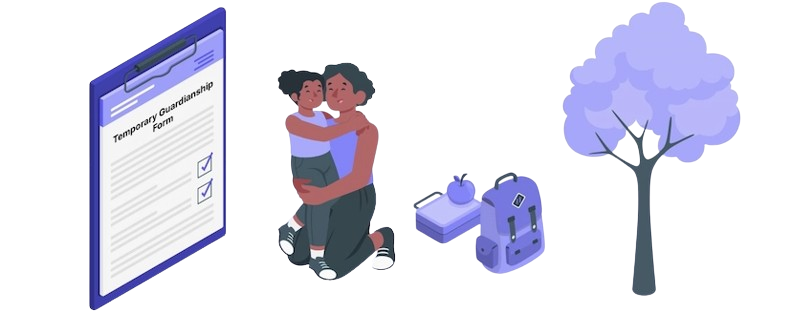
A guardianship case in Texas is a legal process to help someone who cannot care for themselves, like an elderly parent or a person with a disability. It lets a guardian make decisions about care and money. Fees may include filing and court costs under Texas Estates Code § 1155.151. The main law is in the Texas Estates Code §§ 1001–1155.
CRIMINAL

Expunction
In Texas, an Expunction allows eligible individuals to legally erase certain arrests, charges, or convictions from their public record. This provides a clean slate, making it easier to secure jobs, housing, and other opportunities, and helps people move forward without the burden of past legal issues. (Tex. Code Crim. Proc. Ann. Ch. 55A)
CONVENIENCES

Privacy
You can explore legal options for getting a protection order while maintaining your complete privacy. Nothing is shared with the government unless you share or submit.

Resources
Learn about free community and pro bono resources. Connect with them and share your case data with a few clicks.

Comprehensive
Covers all common situations such as those involving minors, or firearms, or others permitted by Texas law, thereby saving you time.

Forms Selection
The correct forms, in their most up-to-date versions, are automatically selected based on your situation.

Automated Checks
Run automated checks to verify the correctness of your responses and to avoid mistakes that may cause delays in securing a protection order.

Simplified
All questions are presented in plain, non-legal language. Difficult concepts are broken down into simpler steps.
NOTES

Legal Information
The legal information contained here does not constitute legal advice or substitute for legal advice.

Courts
This website provides services to prepare cases across Texas, as the state courts share the same state-wide law. It also covers slight court-specific differences, such as additional required court forms.
CONTACT TECHNICAL SUPPORT
This contact form is for technical support questions only.