
Recently updated on October 12th, 2026 at 09:17 pm
Create Court Forms and E-File for Minor Guardianships in Washington
This website helps you prepare and e-file legal forms for a Minor Guardianship in Washington State.
Minor Guardianship is a legal case defined in RCW 11.130 to appoint a legal guardian for a child because the parents are absent (e.g., dead, imprisoned, in rehab, etc.).
This website leads you through friendly online questionnaires, with helpful tips directly from courts to prepare your case documents to file for a Minor Guardianship. Once you complete the questionnaires, you can download the latest official version (last updated July 2024) of court documents (Word and PDF) or e-file these with the court.
You can also just explore your options, as your privacy is kept and your case is visible only to you until you file with the court.
Start
HOW THIS WEBSITE WORKS
This website provides a guided experience to people who are working themselves on preparing the court forms for a Minor Guardianship.

1. Is It an Emergency Minor Guardianship?
Start by entering your ZIP code so our system can determine the courthouse with jurisdiction. Answer a few questions to determine whether your case would be an emergency or a non-emergency one.

2. Prepare Standard Case Documents
This website will present you with simple questions to gather the data required to prepare the official Washington court forms needed to start the case. Each topic offers questions in simple and non-legal language.

3. Consult Advocate (Optional)
Depending on your situation, the website can list any local and trusted nonprofits. These nonprofits can help you with certain aspects of the case.

4. File with the Court
This website simplifies the filing to a couple of clicks. Once filed, you can also get follow-up notifications from the court. You can also serve documents electronically to the other parties.
Emergency vs. Non-Emergency
Depending on the situation, you can apply for either an emergency order, which lasts for a short term (60 days), or a non-emergency, longer-term order.
Emergency (also called Short Term)
- To urgently prevent harm to the children
- Order is effective for 60 days
- Can be renewed one time so it lasts another 60 days (max 120 days total)
Non-Emergency (also called Long Term, or Regular)
- Longer-term, deliberate planning for the children’s well-being
- Order is effective until all children reach the age of 18
- Process can take 60 days from the filing date
Process for Emergency Minor Guardianship
The steps here provide a breakdown of the steps involved from now until the end of the case. Washington State has had a new process since January 2021, which replaced “nonparental custody” for taking guardianship of a minor.
Step 1
You: Get Background Reports on Guardians (and All Household Members)
You need to get official background reports on the guardians and every adult who lives with them.
The idea is to show the court that the child will not end up in a household with criminals.
The criminal background report must be downloaded from the Washington State Patrol’s website.
Step 2
You: Create Court Forms
Answer a series of interviews (questionnaires) on this website. Your responses will be used to fill the official court forms.
You will address topics about the children, the guardian, the parents, and similar related topics that help the court understand the complete picture.
You will be uploading the background check reports you obtained in Step 1.
Step 3
File with the Court
This website also allows you to digitally sign the court forms and e-file them with the court.
Filing means officially submitting the documents to the court.
There are two ways of doing this step, and both have the same effect:
- Online (called e-filing)
- In person
E-filing is convenient and you can do it anytime. The official date of filing is the day when you file, or if you file after court hours of operation, then it’s the next day.
The case documents are filed at your county’s Superior Court.
Once the filing is successful, a case number is assigned.
Step 4
Emergency Hearing
The petitioner selects the hearing date from the options available on the court calendar and files a Notice of Court Date for both the temporary and return hearings.
The Ex Parte Department calendars have limited spaces available.
The petitioner must give the other party at least 2 days’ notice of their intent.
This notice is required in all cases unless they can clearly show by sworn declaration that immediate injury, loss, or damage will result if notice is given.
If you need a same-day emergency motion
Parties with emergencies may reserve a hearing the same day if space is available. You must file the required forms and notify the Ex Parte Department, typically early in the day (i.e., by noon). Attach your filed Notice of Hearing, motion materials, and any proposed orders to the email.
If the Commissioner grants the immediate order, they will also set the matter for a review hearing before a judge in a few days.
Process for Non-Emergency Minor Guardianship
The steps here provide a breakdown of the steps involved from now until the end of the case. Washington State has had a new process since January 2021, which replaced “nonparental custody” for taking guardianship of a minor.
Step 1
You: Get Background Reports on Guardians (and All Household Members)
You need to get official background reports on the guardians and every adult who lives with them.
The idea is to show the court that the child will not end up in a household with criminals.
The criminal background report must be downloaded from the Washington State Patrol’s website.
Step 2
You: Create Court Forms
Answer a series of interviews (questionnaires) on this website. Your responses will be used to fill the official court forms.
You will address topics about the children, the guardian, the parents, and similar related topics that help the court understand the complete picture.
You will be uploading the background check reports you obtained in Step 1.
Step 3
File with the Court
This website also allows you to digitally sign the court forms and e-file them with the court.
Filing means officially submitting the documents to the court.
There are two ways of doing this step, and both have the same effect:
- Online (called e-filing)
- In person
E-filing is convenient and you can do it anytime. The official date of filing is the day when you file, or if you file after court hours of operation, then it’s the next day.
The case documents are filed at your county’s Superior Court.
Once the filing is successful, a case number is assigned.
Step 4
Serve the Other People and File the Proof
You must take steps to serve the petition and related documents on all of the parties who must be served, and you must send the notice of the 60-day hearing you have prepared to everyone who is entitled to notice.
Proof of service and proof of sending the notice of hearing must be filed with the court before the hearing. The hearing is held about 60 days after filing.
Who needs to be served?
Serving is the official court way of letting somebody know that a case is happening.
A few people need to be served in a guardianship case:
- The minor, if 12 or older
- Their parents or next of kin
- The current guardian or somebody with nonparental custody
- Other people of interest identified in the petition
Step 5
Attend Online Guardian Training
Guardianship law in Washington requires that a person who will serve as a guardian learn about the duties and responsibilities of guardianship. That training may be accessed on the Washington Courts Guardianship Portal.
Step 6
Hearing
All final minor guardianship orders are issued at a scheduled hearing.
At the 60-day hearing, the Commissioner will determine whether the case is ready to move forward, including whether:
- All of the necessary parties have been served or have notice of the hearing
- The criminal history and CPS background checks have occurred and are acceptable
- A visitor, guardian ad litem (GAL), or attorney for any party needs to be appointed, and if those steps have been taken
The Commissioner may also decide whether the guardianship can be completed by default, by agreement, or if the case needs to be set for a contested trial.
The Commissioner will either refer the matter to a trial judge to set a trial, or set additional Ex Parte hearings to finish the case.
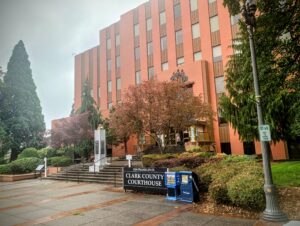
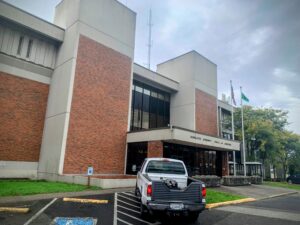
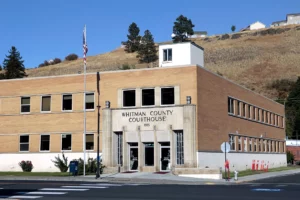
Filed at a WA Courthouse
Your case documents are filed at the Superior Court in your county. Here are examples of some.


























Court Forms Created
When you pass the screening and complete the questionnaires, you can then download the following standard court forms filled correctly with your information. These court forms are provided by the Washington Courts.
Core Forms
- Minor Guardianship Petition
- Emergency Minor Guardianship Petition
- Notice of Hearing about a Minor Guardianship Petition
- Summons
- Declaration Explaining the Reasons for Minor Guardianship
- Parent’s Consent to Minor Guardianship
- Criminal History Cover Sheet
- Motion for DCYF Order to Release CPS Information
- Order to DCYF to Release CPS Information
- Indian Child Welfare Act Notice
- Proof of Mailing ICWA Notice
- Confidential Information Form
- Guardianship Case Information Cover Sheet
- Disclosure of Bankruptcy or Criminal History
- Acceptance of Appointment of Guardian or Conservator
- Residential Schedule
- Proof of Personal Service
- Minor Guardianship Findings and Order
- Letters of Guardianship
- Motion to Withhold Certain Documents from the Minor (if needed)
- Order on Motion to Withhold Certain Documents from the Minor (if needed)