
Recently updated on October 27th, 2025 at 04:55 am
Process Overview
This website presents a list of questions, and then at the end generates the paperwork for SPO.
HOW THIS WEBSITE WORKS
This website provides a guided experience to people who are working themselves on preparing the court forms for a Domestic Violence Restraining Order.

1. Eligibility
✔ Check to see if you meet the minimum criteria to petition for Vulnerable Adult Protection Order.
✔ Answers a few questions which are in simple language. No difficult legal terms.
✔ View help content and videos prepared by lawyers in Washington.
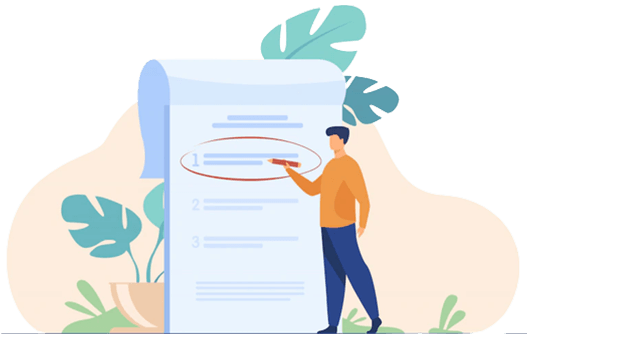
2. Prepare court forms
✔ Answer detailed questions about you and the respondent.
✔ Request specific protections and attach supporting documents.
✔ Download documents as a PDF or Word.

3. Get Help
✔ If you have procedural questions, court staff are available to provide answers. However, they are unable to answer legal questions.
✔ You will be presented with contact information for the county’s advocacy programs.
4. Submit to Clerks Office
✔ LegalAtoms will notify the clerk that your documents are available for review.
✔ Clerk’s office staff will prep your documents for consideration by the court.
✔ Judicial Officer will review your petition and sign an order.
✔ The Clerk’s Protection Order office will provide you with a copy of your order once it is signed and processed.
WHO CAN START A CASE
This website provides a guided experience to people who are working themselves on preparing the court forms for a Civil Stalking Protection Order.
1. Victim 15+ years
Anyone 15 years or older, and without a parent's permission can create the paperwork and file to start a case.

2. On behalf of a minor (under 18)
A minor's parent, legal guardian or custodian can file the petition on behalf of that minor. The parent, legal guardian or custodian must be 15 years or older.

3. On behalf of a senior or disabled person
An adult can file on behalf of a vulnerable adult
WHO CAN BE PROTECTED
This website provides a guided experience for people seeking a Civil Stalking Protection Order.
1. Person being stalked
Anyone who is experiencing stalking, meaning repeated and deliberate conduct that causes fear, alarm, or substantial emotional distress, may ask for protection.

2. Minor child (Under 18)
A parent, legal guardian or custodian may file on behalf of a minor child who is being stalked.
3. Vulnerable or incapable adult
An adult may file on behalf of another adult who is vulnerable, disabled, or otherwise unable to file on their own and is being stalked.
WHO CAN BE RESTRAINED
This website provides a guided experience for people seeking a Civil Stalking Protection Order.
1. The person engaging in stalking
The court may restrain a person who follows, monitors, contacts or harasses the protected person repeatedly, deliberately, and without a lawful purpose.

2. Any stalker regardless of relationship
The restrained person need not be a family or household member, stalking protection orders cover conduct from acquaintances, strangers, former partners, etc.

3. Persons whose conduct causes fear or distress
An adult may file on behalf of another adult who is vulnerable, disabled, or otherwise unable to file on their own and is being stalked.
FAQs
Resources

Official website of the Washington Courts which provides court forms and instructions.

WCSAP unites agencies engaged in eliminating sexual violence and provides information and training to members

WSCADV is a resource for programs that assist domestic violence survivors and their families

The VINE system is a free service that allows petitioners to register for notification when a protective order of any type that has been served or is about to expire.
Do Protection Orders Help?
Here the outcome of a research on domestic violence from University of New Hampshire

1. Reduce Violence
Civil protective orders (such as a Domestic Violence Protection Order, an Anti-harassment Protection Order, a Sexual Assault Protection Order) are effective in reducing violence and harassment. For example, for half the women in the sample studied, a protective order stopped the violence. For the other half, the orders significantly reduced violence and abuse.

2. Cost Effective
They are a relatively low-cost solution, particularly when compared with the social and personal costs of partner violence.

3. Cities vs. Countryside
The impact of civil protective orders on reducing violence and abuse did not differ for rural (country side) and urban (cities) women. In rural areas, where resources and services for partner violence may be more limited, it is critical to reduce barriers to obtaining protective orders as research indicates they may be an effective resource. Community-level barriers to enforce civil protective orders exist for women in rural areas.
Court Forms Created
LegalAtoms guides you through all the topics required to complete your protection order documents and file your case.
