
Civil harassment restraining order against neighbor in California
 Civil harassment Restraining Order (CHRO) is for situations when the abuser is your roommate, neighbor, coworker, total stranger or anyone who is not a romantic partner or close family member.
 Precheck: Does my situation even qualify for filing for a Restraining Order
Before you do the work of preparing and filing the case documents, here’s a summary of two key types of restraining orders and the situations they apply to
Criteria for Civil Harassment Restraining Order
- Credible threats of violence: Threats that would make a reasonable person fear for their safety or the safety of their immediate family.
- A course of conduct that seriously alarms, annoys, or harasses someone and serves no legitimate purpose.
- The conduct must be such that it would cause a reasonable person substantial emotional distress.
- Examples include repeated unwanted contact, following someone, or sending threatening messages.
There are no relationship requirements. Common situations are:
- Neighbor
- Roommate
- Co-worker
- Landlord
- A Stranger i.e. someone who stalks you or harasses you and you don’t know them
What if I am Under 18 years of Age
Restraining orders can be requested by anyone 12 years or older, and without your parent’s permission. If you are under 18, then in some situations , a judge may ask you to have a trusted adult help you in your case after you have filed for the petition. such as a parent a counselor or a neighbor.
If you are under 18, you can go to your local court’s Self-Help Center for help. For support and safety tips, you can chat at loveisrespect.org, text “LOVEIS” to 22522, or call 1-866-331-9474.
If you are 12 or older and someone has asked for a restraining order against you, you can go to court without a parent. In some situations, the judge may ask you to have a trusted adult help you in your case.
What if the abuser lives out of California
A non-California resident who abuses a California resident may be subject to the state’s jurisdiction. That means that a California court can make orders prohibiting a non-California resident from further abusing a California resident. Abuse committed by out-of-state parties subjects them to this state’s personal jurisdiction.
An act of abuse by a party in another state against a person in California is subject to “special regulation” in this state and is sufficient to vest personal jurisdiction in the California courts over the out-of-state party to enjoin any further such conduct.






Gather Evidence
The first step is to gather the evidence to support your case. What proof do you need for a restraining order in California. The following are examples to help you organize though anything that supports your claims can be used.

Criminal Case
A criminal case in progress shows that the district attorney also found evidence of the abuse or crimes and therefore supports your claims.

Photos
Photos of violence, injuries, damage
Messages
Print outs of messages, emails or transcripts of voicemail

911 Calls
For each call document the #, date, time, caller, callee details

Medical Records
Documentation of any medical emergencies or injuries or treatments resulting from abuser’s violence.

Police Report
Police reports filed against abuser for domestic violence.

Testimony
A testimony from a witness who can be a family member, neighbor a co-worker or a bystander, either in writing or in person at the hearing, describing the incidents witnessed.
Step 2: Get a copy of court forms
You can fill these online for free by visiting here
In order to apply for a restraining order, you need to fill and submit a specific set of official California court forms. These have questions aimed at understanding your situation and the people involved.
Main form
- CH-100 Request For Civil Harassment Restraining Orders
- CM-010 Civil Case Cover Sheet Required when you file any new civil case.
- CH-109 Notice of Court Hearing: This form is only used if your initial case is successfully submitted but you sill need to file it initially as part of CH-100.
- You will the basic information to make it easier for the court to fill their parts and issue a notice of hearing to all parties including you (or the victim) and the abuser.
- In case a hearing is set then the court fills this form and completes it. Then this is used as a formal “invitation” or notice to attend the court hearing.
- CH-110: Temporary Restraining Order (CLETS-TCH) This form is only used if your initial case is successfully submitted but you sill need to file it initially as part of CH-100. You will the basic information to make it easier for the court to fill their parts
- In case a hearing is set then the court will issue a temporary restraining order via this form so you (or the victim) have protection until the hearing happens. So this is a very powerful document once a judge signs it.
- CLETS-001: Confidential CLETS Information: The information on this form will help police enforce your restraining order. The court will not use the information on this form and the person you want a restraining order against will not get a copy.
- CH-200 Proof of Personal Service: Use to prove that you had someone 18 or older (not you) give the person to be restrained a copy of the request, notice of court hearing, and temporary restraining order (if issued) in person.
- CH-130 Civil Harassment Restraining Order After Hearing (CLETS-CHO): If the judge grants any a full restraining orders (as opposed to the temporary order) they will fill and sign this form. This is the official restraining order then
- CH-120 Restraining Orders Leave this form blank and serve on the restrained person with the copy of your request and notice of hearing.
- CH-800 Proof of Firearms Turned In, Sold or Stored : Leave this form blank and serve on the restrained person with the copy of your request and notice of hearing.
- CH-250 Proof of Service by MailUse to prove that you had someone 18 or older (not you) mail to the restrained person a copy of your Civil Harassment Restraining Order After Hearing (form CH-130). Make sure you can in fact serve form CH-130 by mail in your case.
The complete set of documents is at the California Courts website. While these forms are used in most courts, certain courts use modified versions of these forms, and its important to uses those versions.
 Tip: Check your county’s Superior Court website Or use LegalAtoms to get a complete and updated list of required forms.
Step 3: File with the County’s Superior Court
Filing is the process which means the following steps
- Formally submitting the case documents at the court with the office of the clerk
- The clerk reviews and verifies the correctness of forms and completeness of the required info
- Clerk enters the case in the court database, stamps the documents and assigns a case #
County (Venue)
The proper venue for a restraining order case is the county where the abuse took place or where the restrained party lives. However, venue is a defensive motion and should be considered by the court only if the restrained party objects by filing a noticed motion for change of venue at or before the time of responding to the request.25 Improper venue is not a proper basis for the court to deny relief on its own motion (sua sponte).
Determine the County
In California, one typically file at the Superior Court at county of your residence or where the abuse occurred. For example, if you live in San Francisco city, then the Superior Court of California, County of San Francisco. There can be many special cases and fine print but that is the most common case. Please consult a lawyer if your situation is uncommon e.g. the abuser is overseas or you are overseas and the abuser is in California.
Determine the Correct sub-location
Within the Superior Court of a county, there may be one location such as Superior Court of San Francisco OR multiple locations such as the one in San Bernardino, and each court has it’s own system so that you must file at the correct location.
For example here are some of the locations of the Superior Courts in California at San Bernardino County which are
- Barstow District: 235 East Mountain View Street Barstow, CA 92311
- Fontana District: Fontana District: 17780 Arrow Boulevard Fontana, CA 92335
- Joshua Tree District: 6527 White Feather Road Joshua Tree, CA 92252
- Needles District: 1111 Bailey Ave Needles, CA 92363
- Rancho Cucamonga District: 8303 Haven Avenue Rancho Cucamonga, CA 91730
- Victorville District: 14455 Civic Drive Victorville, CA 92392
- San Bernardino District: 351 North Arrowhead Avenue San Bernardino CA 92415
Identify the methods of Filing
Method # 1: In Person by visiting the court house
Your court location would accept the forms to be submitted in person at the court hours.
Tip: All courts have lunch hours when they are closed for an hour
When you submit your case documents at the court, typically you take 3 copies.
The clerks reviews it, and if everything is ok, they formally enter it into the court system and put a stamp near the top of the documents. That acceptance is called filing.
The stamp may look something like this:
Method # 2: E-file online
This is the most efficient option if you have an e-mail address and some basic computer skills like registering an account, and uploading PDF files.
Some counties now have one or more online portals where you create an account for free, and then you can upload documents and hit submit.
You will be required to some online service fees.
Method # 3: Via another person
Some counties accept filing via a friend or legal courier. These companies or individuals charge a flat or hourly fee and file the documents at the court.
Step 4: Judge Sets Hearing, Grant/Deny Temporary Restraining Order (TRO)
A judge reviews the case offline and then you will be notified by the court about the outcomes which are:
- Temporary Restraining Order Granted
- Temporary Restraining Order Denied
In addition the Judge would typically set a hearing. If the case doesn’t have sufficient evidence it might be dismissed without even a hearing.
The temporary order (if issued) is valid until the hearing i.e. typically about 3 weeks. If the hearing is delayed for any reason, you need to check with the court to ensure the temporary order is renewed until the hearing to provide you with legal protection.
Step 5: Serve a set of Stamped Case Forms including Hearing Notice to Abuser
Whenever one party initiates a restraining order it needs to inform or serve the other party formally by delivering the court documents. That step is called serving the respondent
Under the California law there are multiple ways in which the other party can be served.
 You cannot serve your papers yourself.
Option 1: Ask the Sheriff (FREE)
 A sheriff or marshal can serve the opposing party for you which is a big help. This service is offered for FREE. To ask the sheriff to serve your papers, you must have an address or location for the other side (restrained person). If the other side is in jail, the sheriff can serve them. If the other side is in prison in California, prison staff, not the sheriff, will serve your papers. Follow the instructions by the California Department of Corrections and Rehabilitation for serving someone in prison
Option 2: Ask a friend, relative or any adult (FREE)
 You ask someone you know to be your server
- 18 or over, and
- not part of your case
Think about safety when choosing your server. Get step-by-step instructions for how to have someone else, not the sheriff, serve your court papers.
Option 3: Hire a courier for legal papers (Process Server)
 You can also hire a courier called professional process server. You can search on Yelp or Google to get a list of options near you. Yelp Example . An example is ABC Legal Services.
You cannot hire regular couriers such as UPS, FedEx or US Postal Service unless in exceptional scenarios where the judge authorizes service by mail, but that’s a whole different topic altogether.
Step 6: Present Evidence in a Court Hearing
Attend a hearing: The court holds a hearing within a couple of weeks where the evidence is examined. If there is sufficient supporting evidence as determined by a Judge, a full restraining order is issued. At this point it becomes a crime for the abuser to break the conditions of the restraining order.
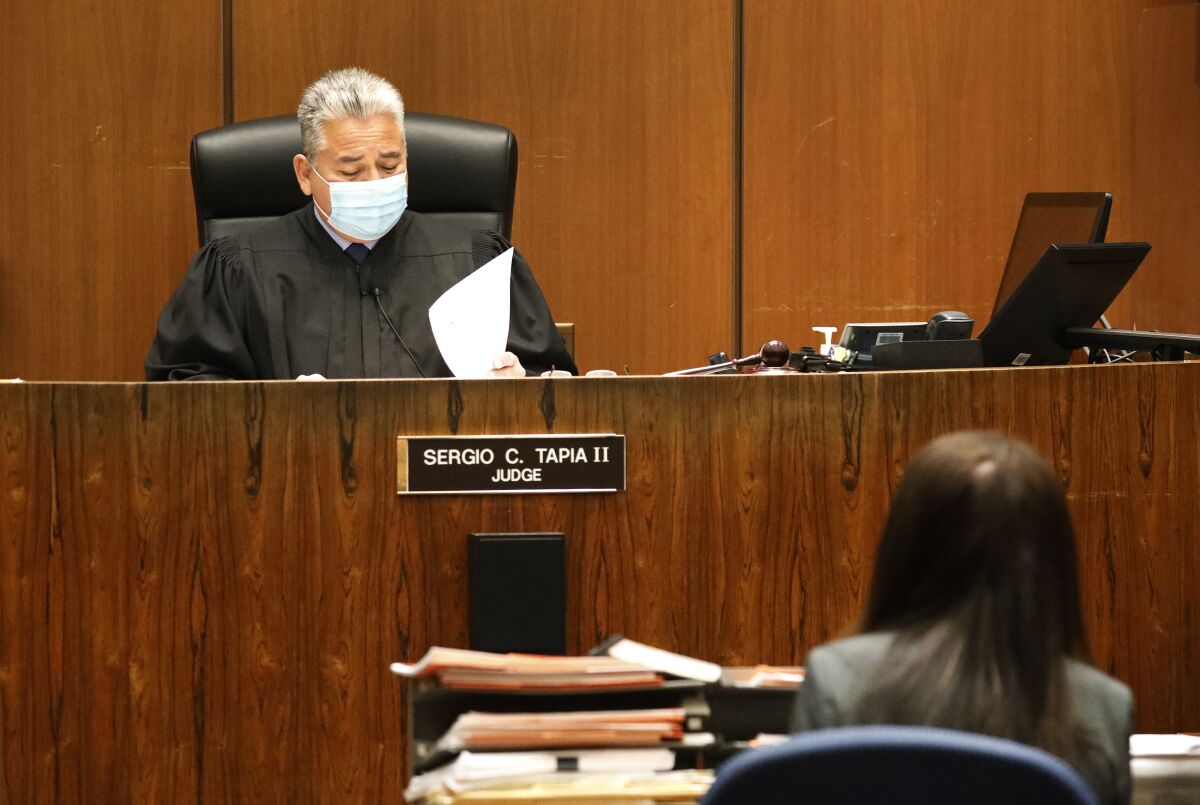
Step 7. Collect the Final Order
After the hearing, a final order may be issued. You can take a paper copy of the order with you. The order is typically valid for five years.
Costs – How much does it cost to get a Civil Harassment Restraining Order
Here are the cost for different components:
- FREE forms : You can get the court forms for free, or prepare them using the guided experience below.
- Government Filing Fee DEPENDS on situation:
- FREE $0 If there is violence or stalking involved OR if you have low income and you qualify for a fee waiver
- $435: Otherwise
- FREE Serving the other party
How long does it take to get a Civil Harassment Restraining Order from filing for a Restraining Order
You can get a temporary protection order the same day as you file.
Courts can have a cutoff of around 2 p.m. for the same day service, so you need to file before then. Otherwise, the order would be issued the following day when courts open.
Courts are generally open Monday-Friday and closed on Saturday-Sunday.
The temporary order is valid until a formal hearing is held in which both parties need to be present. Typically a hearing is scheduled in 2 weeks of filing.
At the hearing a formal order may be issued
Is a restraining order helpful?
The purpose of a restraining order is to restrict the contact or proximity of one person (the respondent or alleged perpetrator) to another person (the petitioner or victim) in order to ensure the safety and well-being of the petitioner.
The specific terms of a restraining order can vary depending on the circumstances of the case e.g. if the people live together then it might require one party to vacate the place.
Typically, a restraining order may prohibit the respondent from
- Approaching or contacting the petitioner including via text or social media
- Staying away from the usual places petitioner is at such as home, work or school
- Prohibit stalking, or surveillance of any kind
- In situations where they lived together, provide custody or access to
- Children
- Pets
- Important documents
- Personal items such as clothes, medications, cell phones
- Cars
- Extending the protections to others living with the petitioner
Research findings on benefits of restraining orders
Here’s the top three findings from a study on domestic violence and restraining orders from the University of New Hampshire
 Reduce Violence
Civil protective orders (such as a DVRO) are effective in reducing partner violence for many women. For half the women in the sample, a protective order stopped the violence. For the other half, the orders significantly reduced violence and abuse.

Cost Effective
They are a relatively low-cost solution, particularly when compared with the social and personal costs of partner violence.

Urban Vs. Rural
The impact of civil protective orders on reducing violence and abuse did not differ for rural and urban women. In rural areas where resources and services for partner violence may be more limited, the restraining orders hold greater importance.
Risks of a Restraining Order
It is conceivable that following the submission of a civil protection order, the abuser particularly in domestic violence situations may react with anger due to the perceived loss of control over you and your household. In certain instances, the abuser may portray themselves as the victim and shift blame onto the actual victim they were mistreating.
The response of your abuser after the filing of a protection order is unpredictable. While a Domestic Violence Protection Order (DVPO) can provide legal protection, one should not automatically assume that it guarantees safety. The initial weeks post-filing can be particularly precarious, contingent on your abuser’s reaction.
Despite the safeguards intended by a DVPO, abusers may retaliate through various means, such as:
- Physical assault or violence
- Harming or taking away children
- Damaging jointly owned property
- Disregarding the order and persisting with threats, possibly through intermediaries
- Inflicting harm or causing harm to pets
- Harassing your loved ones for information
- Engaging in stalking behavior
- Initiating a retaliatory restraining order against you
- Spreading false information about you in court documents, online, or publicly
Following the submission of a domestic violence Protection order, it’s important to continuously assess your situation and prepare for the potential escalation of your case into more violent territory.
WHAT RESTRICTIONS CAN YOU ASK THE JUDGE FOR
Here are the typical restrictions places on the abuser via the restraining order.

Stay Away From You
Abuser would have to stay at least 100 yards away from you, your children and locations you request such as your work

Not To Contact You
Not to contact you via phone or text or mutual friends

Not Stalk You
Not stalk you or your loved ones, including your accounts on facebook or other social media

Hand Over A Car
Get access to cars held by the abuser

Vacate The Shared Residence
The respondent can be asked to vacate the shared residence. You can also request help from police to kick them out.

Handover Passport, Cell Phone, Medications Etc.
You an ask for your personal items such as passport, medications, clothes. This would be applicable if you were living together up to now.

Don’t Post Intimate Images
Take down, delete, and do not distribute intimate images of a protected person

Restrict Abusive Litigation
This is to prevent the misuse of the legal system to harass, intimidate, or burden you.

Get Drugs, Mental Health And Sex Offender Treatment
You can request the abuser to seek treatment for alcoholism, drug use, domestic violence abuse
Forms needed
These are the court forms typically required for this process. LegalAtoms prepares each of them for you automatically.
- CH-109 Notice of Court Hearing
- CM-010 Civil Case Cover Sheet
- RI-Cl032 Certificate Of Counsel
- L-0889 Declaration Re Notice Temporary Restraining Order
- CH-116 Order On Request To Continue Hearing
- CV-5014 Declaration In Support Of Ex-Parte Application For Civil Restraining Orders
- VN-189 Consent For Court assignment
- VN-028 Declaration Re Ex Parte Notice
- 13-16503-360 Certificate of Assignment
- Declaration Declaration Re Notice Upon Ex Parte Application For Orders
- FL-303 Declaration Regarding Notice For Temporary Order
- EPN Declaration Regarding Ex Parte Notice To Opposing Party
- CH-100 Request for Civil Harassment Restraining Orders
- CH-110 Temporary Restraining Order
- CH-200 Proof of Personal Service
- CH-115 Request to Continue Court Hearing
- CH-130 Civil Harassment Restraining Order After Hearing (CLETS-CHO)
- CH-120 Response to Request for Civil Harassment Restraining Orders
- CH-CLETS-001 Confidential CLETS Information