
How to report stalking including cyberstalking and get a restraining order in California

Stalking is generally defined as being followed without permission, and now there is online stalking of surveilling activities online.
In California stalking is a crime i.e. you can report it to the police and they will take legal action against the person stalking you. However proving that someone is stalking you can be difficult and something that might be simpler is to get a restraining order against that person which requires less evidence.
The types are:
 Civil harassment Restraining Order (CHRO) is for situations when the stalker is your roommate, neighbor, coworker, a total stranger or anyone who is not a romantic partner or dating interest or close family member. Create CHRO Forms Online
 Domestic Violence Restraining Order is for situations when the stalker is your current or former romantic partner or someone you dated, or a family member (not roommate)
Create DVRO Forms Online
 Gun Violence Restraining Order: is for cops or family members to apply for when an unstable person has a firearm, and risks hurting themselves or others. The court order requests firearms to be taken away.
Create GVRO Forms Online
 Elder Abuse: is for situations when a senior citizen or disabled adult is being abused by a caretaker, neighbor or child .
(Not quite ready for online filing)
Other types (not for individuals)
 Workplace Violence: An employer (not individual) requests these to protect their employee(s) from a person who has stalked, harassed, been violent or threatened violence at the workplace.
 School Violence: A school official requests these when there’s risk of violence against students at a private college or university when the risk of violence is at the on campus.
Stalkers use many tactics, including:
 Making unwanted phone calls or texts
 Approaching the victim or showing up in places when the victim does not want them to.
 Following and watching the victim.
 Sending unwanted photos, emails, and messages through social media.
 Sending unwanted gifts.
 Using technology to monitor, track, and/or spy on the victim.
 Online Harassment: Making rude, offensive, or suggestive comments online
 Catfishing: Using manipulative tactics, such as luring someone into a relationship, to harm them
 Impersonation: Posting comments on social media or in chat rooms in the victim’s name
 Monitoring: Installing a recording or monitoring device on the victim’s computer or smartphone to save their keystrokes
 Spoofing: Disguising the content of a link, email, text message, or display name to trick the receiver into giving away sensitive information
 Phishing: Deceptively posing as a trustworthy source to trick people into giving away personal or financial information
Option 1: Call the Cops
Stalking is a crime and you can report it to your local police department (or Sheriff’s office for people living outside cities)
The legal definition of Stalking is in California Penal Code section 646.9:
“Any person who willfully, maliciously, and repeatedly follows or willfully and maliciously harasses another person and who makes a credible threat with the intent to place that person in reasonable fear for his or her safety or the safety of his or her immediate family is guilty of the crime of stalking.”
This video from an independent lawyer explains the definition.
Cyberstalking in California
California’s cyberstalking laws make it illegal to stalk someone using electronic devices, constituting a form of online harassment through the Internet’s anonymity.
Under Penal Code 646.9 PC, stalking is defined as harassing or threatening someone to the point where they fear for their safety or the safety of their family.
Cyberstalking in California Cyberstalking is similar to traditional stalking but involves electronic communication devices. In the late 1990s, the law was updated to include “electronically communicated threats” in the definition of credible threats.
An “electronic communication device” includes the Internet, cell phones, landlines, text messages, email, fax machines, or any other type of electronic device.
New laws are needed to protect people from digital abuse, but legislating the Internet can sometimes raise First Amendment concerns, especially with cyberstalking charges.
The Los Angeles District Attorney’s Office has a special unit, the “stalking and threat assessment team (STAT),” which works with Los Angeles Police Department detectives to investigate and prosecute cyberstalking cases.
In California, cyberstalking is considered a type of stalking, and those accused can face misdemeanor or felony charges, known as a “wobbler.”
The prosecutor’s decision to file charges usually depends on factors like:
- Whether the victim had already filed a restraining order,
- The defendant’s criminal history,
- Whether the stalking was related to a domestic violence case.
With the rise of social media and other online platforms, cyberstalking cases are becoming more common.
It’s crucial to handle these charges carefully to maintain a clean criminal record. Our Los Angeles criminal defense lawyers will provide more details below
CHAPTER 2. Of Other and Miscellaneous Offenses – 646.9.
(a) Any person who willfully, maliciously, and repeatedly follows or willfully and maliciously harasses another person and who makes a credible threat with the intent to place that person in reasonable fear for his or her safety, or the safety of his or her immediate family is guilty of the crime of stalking, punishable by imprisonment in a county jail for not more than one year, or by a fine of not more than one thousand dollars ($1,000), or by both that fine and imprisonment, or by imprisonment in the state prison.
(b) Any person who violates subdivision (a) when there is a temporary restraining order, injunction, or any other court order in effect prohibiting the behavior described in subdivision (a) against the same party, shall be punished by imprisonment in the state prison for two, three, or four years.
(c) (1) Every person who, after having been convicted of a felony under Section 273.5, 273.6, or 422, commits a violation of subdivision (a) shall be punished by imprisonment in a county jail for not more than one year, or by a fine of not more than one thousand dollars ($1,000), or by both that fine and imprisonment, or by imprisonment in the state prison for two, three, or five years.
(2) Every person who, after having been convicted of a felony under subdivision (a), commits a violation of this section shall be punished by imprisonment in the state prison for two, three, or five years.
(d) In addition to the penalties provided in this section, the sentencing court may order a person convicted of a felony under this section to register as a sex offender pursuant to Section 290.006.
(e) For the purposes of this section, “harasses” means engages in a knowing and willful course of conduct directed at a specific person that seriously alarms, annoys, torments, or terrorizes the person, and that serves no legitimate purpose.
(f) For the purposes of this section, “course of conduct” means two or more acts occurring over a period of time, however short, evidencing a continuity of purpose. Constitutionally protected activity is not included within the meaning of “course of conduct.”
(g) For the purposes of this section, “credible threat” means a verbal or written threat, including that performed through the use of an electronic communication device, or a threat implied by a pattern of conduct or a combination of verbal, written, or electronically communicated statements and conduct, made with the intent to place the person that is the target of the threat in reasonable fear for his or her safety or the safety of his or her family, and made with the apparent ability to carry out the threat so as to cause the person who is the target of the threat to reasonably fear for his or her safety or the safety of his or her family. It is not necessary to prove that the defendant had the intent to actually carry out the threat. The present incarceration of a person making the threat shall not be a bar to prosecution under this section. Constitutionally protected activity is not included within the meaning of “credible threat.”
(h) For purposes of this section, the term “electronic communication device” includes, but is not limited to, telephones, cellular phones, computers, video recorders, fax machines, or pagers. “Electronic communication” has the same meaning as the term defined in Subsection 12 of Section 2510 of Title 18 of the United States Code.
(i) This section shall not apply to conduct that occurs during labor picketing.
(j) If probation is granted, or the execution or imposition of a sentence is suspended, for any person convicted under this section, it shall be a condition of probation that the person participate in counseling, as designated by the court. However, the court, upon a showing of good cause, may find that the counseling requirement shall not be imposed.
(k) (1) The sentencing court also shall consider issuing an order restraining the defendant from any contact with the victim, that may be valid for up to 10 years, as determined by the court. It is the intent of the Legislature that the length of any restraining order be based upon the seriousness of the facts before the court, the probability of future violations, and the safety of the victim and his or her immediate family.
(2) This protective order may be issued by the court whether the defendant is sentenced to state prison, county jail, or if imposition of sentence is suspended and the defendant is placed on probation.
(l) For purposes of this section, “immediate family” means any spouse, parent, child, any person related by consanguinity or affinity within the second degree, or any other person who regularly resides in the household, or who, within the prior six months, regularly resided in the household.
(m) The court shall consider whether the defendant would benefit from treatment pursuant to Section 2684. If it is determined to be appropriate, the court shall recommend that the Department of Corrections and Rehabilitation make a certification as provided in Section 2684. Upon the certification, the defendant shall be evaluated and transferred to the appropriate hospital for treatment pursuant to Section 2684.
Evidence for Crime
The Police (or Sheriff) will ask you for evidence because in order to file a case for CPC 646.9 Stalking, the state needs evidence that proves that the legal definition of stalking was met, and for that they need to prove these sub-points:
- The stalker intentionally followed or harassed someone
- The stalker did that multiple times
- The stalker threatened you which caused you to be fearful of your own or your loved ones safety
How to Report
- Call 911 if there is an emergency that requires immediate assistance from the police because the crime is in progress or just occurred, someone is pointing a weapon at someone or if there’s suspicious or violent physical activity.
- Report the local police via phone or via their website which may have a small questionnaire. Select the police department of where the incident occurred. For example if you generally live in the City of Los Angeles but experienced stalking in Burbank then call the Burbank police department.
Punishment if convicted
If convicted of stalking, the penalties are usually severe. Stalking is considered a “wobbler” offense, meaning the prosecutor can choose to charge it as either a misdemeanor or a felony.
Additionally, in cases involving special circumstances, such as a prior stalking conviction, the charge must be filed as a felony. The possible punishments for stalking are as follows:
- Misdemeanor offense: Up to one year in county jail and a $1,000 fine.
- Felony offense: Up to five years in state prison and a $1,000 fine.
- Felony interstate stalking: Up to five years in federal prison and substantial fines.
- Sentencing is influenced by factors such as the defendant’s criminal history and any other crimes committed in conjunction with the stalking offense.
If someone is convicted of stalking while a restraining order is in effect, they could face two to four years in state prison. In some cases, the defendant may also be required to register as a sex offender.
Importance of Reporting to the Police in all situations
Even if you plan to not pursue a criminal case, reporting the incident formally (which may take 10-20 minutes online at the Police Department’s official website) will help you build evidence for future. Having a concrete police report with a date, and details will strengthen your case by showing repeat pattern, and additionally serve as evidence in case you opt to get a restraining order.
Option 2: Request a Restraining Order
You can request for a restraining order against a person you suspect is stalking you. You can ask for the restraining order by itself only, or in addition to the criminal case i.e. you can do both.
There are two types of restraining orders and the appropriate one depends on your relationship with the stalker.
Domestic Violence Restraining Order (DVRO)
DVRO is the appropriate type of restraining order if the stalker is someone who you:
- dated or
- had an intimate relationship with, including a spouse or domestic partner or someone with whom you’ve a child or
- is a relative such a parent sibling or grandparent
The general process is the same across California, however the court location, some of the official forms required to apply for a restraining order and hours of operation are specific to your county (not your city or zip code)
Civil Harassment Restraining Order (CHRO)
If the stalker is not related to you in the ways that make DVRO the appropriate choice, then for all other relationships e.g. total stranger, a neighbor, a co-worker etc. — the appropriate choice is a Civil Harassment Restraining Order.
The general process is the same across California, however the court location, some of the official forms required to apply for a restraining order and hours of operation are specific to your county (not your city or zip code)
Evidence Needed for Restraining Orders
So if you suspect you’re being stalked you can start organizing the evidence which you can submit with the initial petition and then again at a court hearing.
- Pending Criminal Case: Judges are also more likely to issue an order if there is an ongoing criminal case, therefore it’s important to call such cases out when seeking a temporary restraining order, including any police report filed. When a judge sees that there’s a criminal case happening, they might think it means the police or the district attorney are pretty sure they can prove the crime happened, and that strengthens your claims.
- Photos of stalking: These are the most common types of evidence submitted. These can be photos of victim’s injuries inflicted by the abuser. It is helpful to add photos next to the related incident description to help create a complete picture for the judge.
- Print outs of messages, emails or transcripts of voicemail: You can take screenshots of text messages and attach them. Similarly you can print emails and attach them as pictures or PDF files. While in most cases you cannot submit digital files such as
- 911 Calls reporting the stalking: Rather than just saying you called 911 or any specific hotline, you can make your case stronger by listing the following items
- The number dialed in case of the domestic hotline
- The date and time (or approximate date and time) when the call was made
- Who made the call
- What was reported on the call
- Any specific details of the person who answer the 911 call e.g. male/female voice
- Records from Hospital or Psychologist: If you talked about the stalking to a professional, a school counselor, a shrink or a therapist, you can have them issue a record of that conversation to serve as written evidence. These could be hospital visit records, print outs from your hospital portal (E.g. mychart) showing details of your visit.
- Police reports: You can attach a copy of the police reports filed against abuser for domestic violence.
- Testimony from a Witness: A testimony is a formal written or spoken statement, especially one given in a court of law. The witness can be anyone such as a family member, neighbor a co-worker or a bystander. The testimony is just an essay written describing the incidents witnessed, with as many specifics as possible.
Resources for Stalking Victims
Victims can talk to “advocates” who can talk to you, understand your situation, and provide you with personal safety and legal information. These services are provided by State and Federal agencies without any charge, and without any concern about your legal immigration status in United States, so its very helpful to talk to them.
Here are some examples of Victim Services provided by the District Attorney’s Office at Each county:

Cities include: Los Angeles (city), Long Beach , Santa Clarita Glendale Lancaster Palmdale and so on

Cities include: San Diego (city), Chula Vista, Oceanside, Escondido, Carlsbad and so n

Cities include: Anaheim, Santa Ana, and Irvine and so on
Cities include: Riverside, Moreno Valley, Corona, Temecula, Murrieta, Hemet, Palm Springs, Indio

Cities include: San Bernardino, Fontana, Rancho Cucamonga, Ontario, Victorville, Chino, Hesperia
 Link: Santa Clara County
Cities include: San Jose, Santa Clara, Sunnyvale, Mountain View, Milpitas, Gilroy, Los Gatos
 Alameda County Family Justice Center
Cities include: Oakland, Fremont, Berkeley, Dublin-Pleasanton-Livermore, Hayward.
Cities include: Concord, Antioch, Richmond, Walnut Creek, San Ramon, Pittsburg, Martinez
Cities include: Fresno, Clovis, Reedley, Sanger, Selma, Kerman
Cities include:
Process for getting a restraining order
Step 1: Gather Evidence
The first step is to gather the evidence to support your case. The fallowing are considered as evidence of domestic violence
Evidence Type 1: Pending Criminal Case
Judges are also more likely to issue an order if there is an ongoing criminal case, therefore it’s important to call such cases out when seeking a temporary restraining order.
When a judge sees that there’s a criminal case happening, they might think it means the police or the district attorney are pretty sure they can prove the crime happened.
Examples of evidence are:
Evidence Type 2: Photos of violence, injuries, damage
These are the most common types of evidence submitted. These can be photos of victim’s injuries inflicted by the abuser. It is helpful to add photos next to the related incident description to help create a complete picture for the judge.
Evidence Type 3: Print outs of messages, emails or transcripts of voicemail
You can take screenshots of text messages and attach them. Similarly you can print emails and attach them as pictures or PDF files. While in most cases you cannot submit digital files such as
Evidence Type 4: 911 Calls
Rather than just saying you called 911 or any specific hotline, you can make your case stronger by listing the following items
- The number dialed in case of the domestic hotline
- The date and time (or approximate date and time) when the call was made
- Who made the call
- What was reported on the call
- Any specific details of the person who answer the 911 call e.g. male/female voice
Evidence Type 5: Medical Records
.You can attach documentation of previous medical emergencies or injuries that resulted from the actions of the abuser. These could be hospital visit records, print outs from your hospital portal (E.g. mychart) showing details of your visit.
Evidence Type 6: Police reports
You can attach a copy of the police reports filed against abuser for domestic violence.
Evidence Type 7: Testimony
- A testimony from a witness. The witness can be anyone such as a family member, neighbor a co-worker or a bystander. The testimony is just an essay written describing the incidents witnessed, with as many specifics as possible.
Step 2: Get a copy of court forms
In order to apply for a civil protection order, you need to fill and submit a specific set of official California court forms. These have questions aimed at understanding your situation and the people involved.
- DV-100 Request for Domestic Violence Restraining Order (DV-100). This is the main form, though a few are required to be able to file the case which is the first step.
- CLETS-001 Confidential CLETS Information The information on this form will help police enforce your restraining order. The court will not use the information on this form and the person you want a restraining order against will not get a copy.
- DV-109 Notice of Court Hearing
- DV-110 Temporary Restraining Order
- FL-150 Income and Expense Declaration This form if you are asking for attorney’s fees, spousal support, or child support. This form asks how much money you earn and what your expenses are. Attach proof of your income (like paystubs) from the past two months to the form.
- DV-120 Response to Request for Domestic Violence Restraining Order
- DV-200 Proof of Personal Service (CLETS)
If you have children together, and also want child custody, parenting time, or child support orders:
8. DV-105 Request for Child Custody and Visitation Orders Ask the judge for custody orders if you have children with the person you want a restraining order against.
DV-140 Child Custody and Visitation Order: On form DV-140, complete items 1 and 2 and the judge will complete the rest of this form. If you are asking for the parent to be supervised during their visits with your child, you will also need form DV-150. Complete items 1 and 2 on form DV-150 and the judge will complete the rest of this form.
DV-108 Request for Order: No Travel With Children: If you believe that the other parent may take your child without your permission, you can ask the court to protect against this. To ask a judge for orders to prevent child abduction, you must complete form DV-108. This form is optional because you do not have to ask for these orders if you want to ask for custody.
DV-145: On form DV-145, complete items 1 and 2. If the judge grants your request, the judge will complete the rest of this form and include it with form DV-110. This form is optional because you do not have to ask for these orders if you want to ask for custody.
The complete set of documents is at the California Courts website. While these forms are used in most courts, certain courts use modified versions of these forms, and its important to uses those versions.
 Tip: You can check your local court’s website to see the exact versions and set of court forms needed. You need to prepare these forms. Courts also offers a free self help center where you can take forms. Alternatively you can use a free website such as LegalAtoms to prepare the restraining orders paperwork online.
Nothing happens until you file the forms. So its a good idea to step through the forms even if you think you don’t plan to file for a protection order right now, to get
You can then file them online when you’ve thought through all aspects. There are special protections for victims, and you’re protected even if your immigration status is undocumented in United States.
Step 3: File the Court Forms
The process of submitting your case documents is called filing. It involves delivering your case documents to the court, then the clerk reviews that they are correct and complete, and accepts them, at which point the case if officially filed. Details are covered at the beginning of this article.
Identify the court at your county
In California, one typically file at the Superior Court at county of your residence or where the abuse occurred. For example, if you live in San Francisco city, then the Superior Court of California, County of San Francisco. There can be many special cases and fine print but that is the most common case. Please consult a lawyer if your situation is uncommon e.g. the abuser is overseas or you are overseas and the abuser is in California.
Correct location
Within the Superior Court of a county, there may be one location such as Superior Court of San Francisco OR multiple locations such as the one in San Bernardino, and each court has it’s own system so that you must file at the correct location.
For example here are some of the locations of the Superior Courts in California at San Bernardino County which are
- Barstow District: 235 East Mountain View Street Barstow, CA 92311
- Fontana District: Fontana District: 17780 Arrow Boulevard Fontana, CA 92335
- Joshua Tree District: 6527 White Feather Road Joshua Tree, CA 92252
- Needles District: 1111 Bailey Ave Needles, CA 92363
- Rancho Cucamonga District: 8303 Haven Avenue Rancho Cucamonga, CA 91730
- Victorville District: 14455 Civic Drive Victorville, CA 92392
- San Bernardino District: 351 North Arrowhead Avenue San Bernardino CA 92415
There are rules provided by the court to figure out where you should file. Some times the court depends on the zip code e.g. here’s the scheme from Superior Court of California at San Diego.
Please refer to the Zip Code List (SDSC Form # ADM-254PDF) for most family law cases, including Non-Governmental Child Support, Custody and Visitation, Divorce (Dissolution), Domestic Violence Restraining Orders, and Paternity cases. Some exceptions to the Zip Code List are noted below.
Methods of Filing
Method # 1: In Person:
Your court location would accept the forms to be submitted in person at the court hours.
Tip: All courts have lunch hours when they are closed for an hour
When you submit your case documents at the court, typically you take 3 copies.
The clerks reviews it, and if everything is ok, they formally enter it into the court system and put a stamp near the top of the documents. That acceptance is called filing.
The stamp may look something like this:
Method # 2: Electronically via a portal
Some counties now have one or more online portals where you create an account for free, and then you can upload documents and hit submit. You will be required to pay around $5-$10 filing fees.
Method # 3: Via another person
Some counties accept filing via a friend or legal courier. These companies or individuals charge a flat or hourly fee and file the documents at the court.
Step 4: Get a Temporary Order
Depending on the facts and evidence presented, a Judge can issue a restraining order with immediate effect until the hearing, called an Emergency Temporary Order. In relatively less risky situations, a temporary order is issued in a few days.
If there are no grounds or if the application is incomplete or the jurisdiction is incorrect the application may be rejected.
The temporary order is only valid for about 3 weeks which is the amount of time until the hearing. If the hearing is delayed for any reason, you need to check with the court to ensure the temporary order is renewed until the hearing.
Step 5: Serve the abuser
If you were successful in getting a temporary order only then this step is necessary, otherwise you will have to wait until you get one.

In the California legal system system, whenever one party initiates a restraining order it needs to inform or serve the other party formally by delivering the court documents. That step is called serving the respondent, and is often seen in movies and TV shows as “You’ve been served”.
Under the California law there are multiple ways in which the other party can be served.
 You cannot serve your papers yourself.
Option 1: Ask a Cop (FREE)
A sheriff or marshal can serve the opposing party for you which is a big help. This service is offered for FREE. You will however need the address of the abuser. To ask the sheriff to serve your papers, you must have an address or location for the other side (restrained person). If the other side is in jail, the sheriff can serve them. If the other side is in prison in California, prison staff, not the sheriff, will serve your papers. Follow the instructions by the California Department of Corrections and Rehabilitation for serving someone in prison
Option 2: Ask a friend, relative or any adult (FREE)
You ask someone you know to be your server
- 18 or over, and
- not part of your case
Think about safety when choosing your server. Get step-by-step instructions for how to have someone else, not the sheriff, serve your court papers.
Option 3: Hire a specialized courier
You can also hire a courier called professional process server. You can search on Yelp or Google to get a list of options near you. Yelp Example . An example is ABC Legal Services.
You cannot hire regular couriers such as UPS, FedEx or US Postal Service unless in exceptional scenarios where the judge authorizes service by mail, but that’s a whole different topic altogether.
Step 6: Present Evidence in a Court Hearing
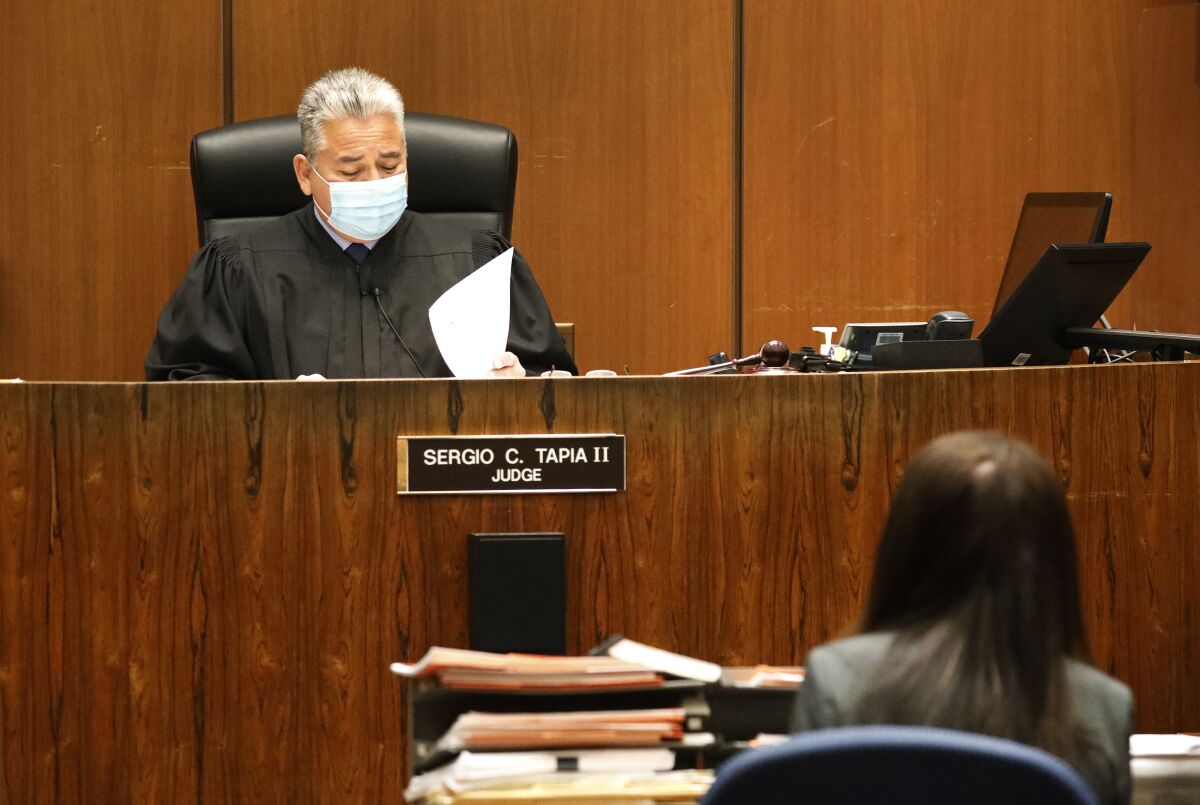
Attend a hearing: The court holds a hearing within a couple of weeks where the evidence is examined. If there is sufficient supporting evidence as determined by a Judge, a full restraining order is issued. At this point it becomes a crime for the abuser to break the conditions of the restraining order.
Step 7. Collect the Final Order
After the hearing, a final order may be issued. You can take a paper copy of the order with you. The order is typically valid for five years.
Costs
There are no costs associated with a Domestic Violence Restraining Order.
- FREE forms : You can get the court forms for free, or prepare them using the guided experience below.
- FREE filing: There is fees for filing. Online filing platforms may charge a service fees
Process Duration
You can get a temporary protection order the same day as you file.
Courts can have a cutoff of around 2 p.m. for the same day service, so you need to file before then. Otherwise, the order would be issued the following day when courts open.
Courts are generally open Monday-Friday and closed on Saturday-Sunday.
The temporary order is valid until a formal hearing is held in which both parties need to be present. Typically a hearing is scheduled in 2 weeks of filing.
At the hearing a formal order may be issued
Comparison: Criminal Case Vs. Restraining Order option
-
Parties: A criminal cases involves a crime, and the legal case (charges etc.) is led by the a government lawyer, called a prosecutor and the case is e.g. State of California Vs. Your Stalker. So it offers some benefits to to the victim as they are not the ones driving the case. Restraining order cases would be between you and the stalker
-
Purpose: In restraining order cases, you can seek certain restrictions on the abuser. In criminal cases, the purpose is to punish the defendant for committing a crime i.e. monetary fine or imprisonment.
-
Severity: Restraining order restrictions usually involve staying away, and not contacting. If the restraining order is between coparents then it also has a big effect on child custody and visitation. Criminal penalties can be much more severe and may include jail time, probation, legal fees, loss of rights, and a criminal record.
-
Burden of proof: In criminal cases, the prosecution has a higher burden of proof than the plaintiff in civil cases because of the serious consequences of a criminal conviction.
Forms needed
These are the court forms typically required for this process. LegalAtoms prepares each of them for you automatically.
- SDSC D049 Family Law Certificate Of Assignment Cover Sheet
- DV-109 Notice of the Court Hearing
- FL/E-LP-665 Family Law Case Participant Enrollment Form (Party)
- FL-ELP-668 Document Drop-Off Sheet for Domestic Violence and Ex Parties Applications
- FAM-020 Family Law Case Cover Sheet And Certificate Of Grounds For Assignment To District
- L1120 Party Identification And Notice Of Related Case
- L1124 Declaration Notice Of Ex Parte Application
- DV-116 Order on Request to Continue Court Hearing
- FM-1013 Declaration In Support Of Ex Parte Application For Orders
- MSC-032 Statement Issues And Contentions
- 13-16503-360 Certificate of Assignment
- SB-13546 Referral For CII
- SC-4012 Declaration Re Ex Parte Notice
- G04050E Confidential CJIS Information Sheet
- DV-110 Temporary Restraining Order
- DV-130 Restraining Order After Hearing
- DV-200 Proof of Personal Service
Free legal help available
You do not have to go through this alone. These organizations offer free, confidential support to help you understand the process and review your court forms.
 Riverside Area Rape Crisis Center
Free
Riverside Area Rape Crisis Center
Free
What you get
- Explain how the court process works An advocate can explain you in detail how the domestic violence process works in your situation
- Review court forms An advocate can review civil protection order forms for completeness
Does not include: Legal Advice · Advice on what to state in court
Phone: (951) 686-7273
Email: info@rarcc.org
Hours: 24/7: Crises phone helpline is always available
 Safe Family Justice Centers
Free
Safe Family Justice Centers
Free
What you get
- Explain how the court process works An advocate can explain you in detail how the domestic violence process works in your situation
- Review court forms An advocate can review civil protection order forms for completeness
Does not include: Legal Advice · Advice on what to state in court
Phone: (951) 686-7273
Email: info@safefamiliesca.org
Hours: Monday, Tuesday, Wednesday, Thursday, Friday: 9am-4pm
 Legal Aid Society of San Bernardino
Free
Legal Aid Society of San Bernardino
Free
What you get
- Explain how the court process works An advocate can explain you in detail how the domestic violence process works in your situation
- Review court forms An advocate can review civil protection order forms for completeness
Does not include: Legal Advice · Advice on what to state in court
Phone: (909) 889-7328
Email: info@legalaidofsb.org
Hours: Monday, Tuesday, Wednesday, Thursday: 1am - 5pm
 Alternatives to Domestic Violence
Free
Alternatives to Domestic Violence
Free
What you get
- Explain how the court process works An advocate can explain you in detail how the domestic violence process works in your situation
- Review court forms An advocate can review civil protection order forms for completeness
Does not include: Legal Advice · Advice on what to state in court
Phone: (951) 425-8900
Email: info@alternativestodv.org
Hours: 24/7: Crises phone helpline is always available
 Shelter From The Storm
Free
Shelter From The Storm
Free
What you get
- Explain how the court process works An advocate can explain you in detail how the domestic violence process works in your situation
- Review court forms An advocate can review civil protection order forms for completeness
Does not include: Legal Advice · Advice on what to state in court
Phone: (760) 674-0400
Email: info@shelterfromthestorm.com
Hours: Monday, Tuesday, Wednesday, Thursday, Friday: 8am - 5pm
 Legal Aid Foundation of Los Angeles
Free
Legal Aid Foundation of Los Angeles
Free
What you get
- Free Legal Assistance
- Help preparing and filing DVRO paperwork
 Survivor Justice Center
Free
Survivor Justice Center
Free
What you get
- Free legal representation
- Direct assistance with DVRO
Hours & Contact
Mon–Thu: 8:30 AM – 12 PM, 1:30 PM – 4:30 PM
Fri: 8:30 AM – 12 PM
Phone: (213) 830-0845
Hours & Contact
Mon–Thu: 8:30 AM – 12 PM, 1:00 PM – 4:00 PM
Fri: 8:30 AM – 12 PM
Phone: (213) 830-0845
Hours & Contact
Mon–Thu: 8:30 AM – 12 PM, 1:00 PM – 4:00 PM
Fri: 8:30 AM – 12 PM
Phone: (213) 830-0845
Hours & Contact
Mon–Thu: 8:30 AM – 12 PM, 1:30 PM – 4:30 PM
Fri: 8:30 AM – 12 PM
Phone: (213) 830-0845
Hours & Contact
Mon–Thu: 8:30 AM – 12 PM, 1:00 PM – 4:00 PM
Fri: 8:30 AM – 12 PM
Phone: (213) 830-0845
Hours & Contact
Mon–Thu: 8:30 AM – 12 PM, 1:00 PM – 4:00 PM
Fri: 8:30 AM – 12 PM
Phone: (213) 830-0845
Hours & Contact
Mon–Thu: 8:30 AM – 12 PM, 1:00 PM – 4:00 PM
Fri: 8:30 AM – 12 PM
Phone: (213) 830-0845
Hours & Contact
Mon–Thu: 8:30 AM – 12 PM, 1:00 PM – 4:00 PM
Fri: 8:30 AM – 12 PM
Phone: (213) 830-0845
Hours & Contact
Mon–Thu: 8:30 AM – 12 PM, 1:00 PM – 4:00 PM
Fri: 8:30 AM – 12 PM
Phone: (213) 830-0845
Hours & Contact
Mon–Thu: 8:30 AM – 12 PM, 1:00 PM – 4:00 PM
Fri: 8:30 AM – 12 PM
Phone: (213) 830-0845